Dormancy Breaking: Physical, Physiological, and Morphological Stratification Protocols
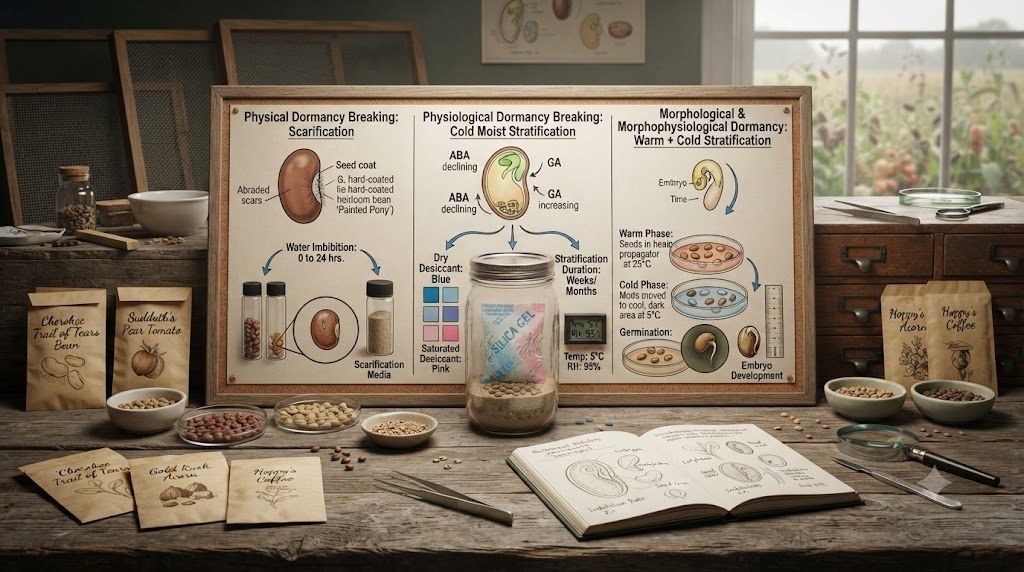
In wild evolutionary ecology, instantaneous seed germination following dispersal is an evolutionary death sentence. If a desert annual germinates following a brief autumn shower, or a temperate deciduous tree seed sprouts immediately before sub-zero winter blizzards, the tender seedlings will be annihilated. To synchronize seedling emergence with favorable seasonal windows, plants evolved an elaborate biological … Read more

The Biochemistry of Germination: Triphasic Imbibition, Hormones, and Enzyme Kinetics

Germination is the dramatic physiological resurrection of a quiescent biological organism. Following weeks, months, or centuries of dormant metabolic arrest, the dry seed encounters water, oxygen, and favorable warmth, initiating a precisely orchestrated molecular transition from heterotrophic storage reliance to autotrophic photosynthetic life. Far from a simple swelling process, germination represents a profound biochemical reprogramming … Read more

Seed Aging, Deterioration Mechanisms, and Tetrazolium Viability Testing

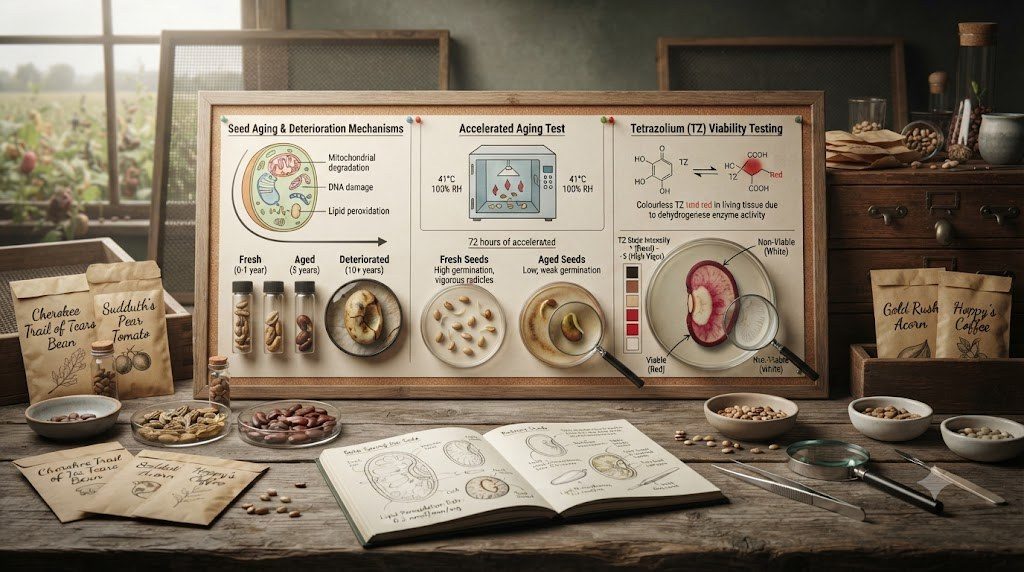
From the precise moment an orthodox seed achieves physiological maturity on the mother plant, an inexorable biological countdown begins. Even under optimal post-harvest storage, seeds undergo progressive, irreversible physiological and biochemical decay known universally as seed deterioration or seed aging. Unlike animal senescence, which involves complex neuroendocrine feedback loops, seed aging is a bottom-up biophysical … Read more

Seed Banking Protocols: Gene Banks, the Svalbard Vault, and Cryopreservation

In an era marked by accelerating anthropogenic climate disruption, widespread habitat fragmentation, and rapid agricultural genetic erosion, ex-situ seed banking represents human civilization’s ultimate biological insurance policy. Deep within fortified subterranean vaults—most famously the Svalbard Global Seed Vault carved into Arctic permafrost, the Millennium Seed Bank at Kew, and the CGIAR international gene banks—billions of … Read more

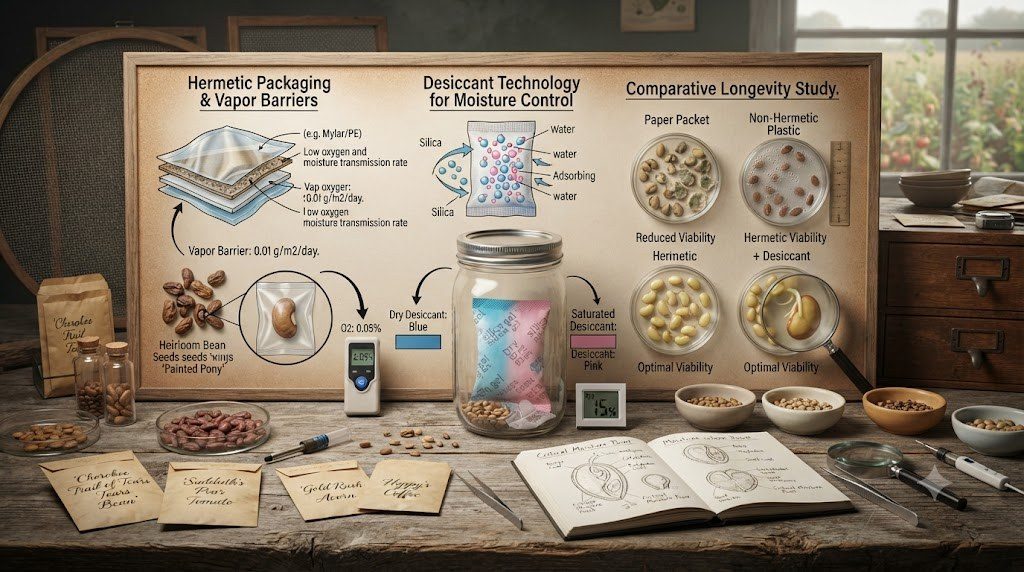
Hermetic Packaging, Vapor Barriers, and Desiccant Technology for Long-Term Storage

Once orthodox seeds have been conditioned to an optimal physiological moisture content, the battle for long-term viability shifts entirely to packaging engineering. In ambient atmospheres, even the most rigorously dried seed lot will rapidly absorb water vapor from humid air, re-equilibrating toward dangerous moisture levels within weeks. Preventing this hygroscopic decay requires hermetic sealing—the deployment … Read more

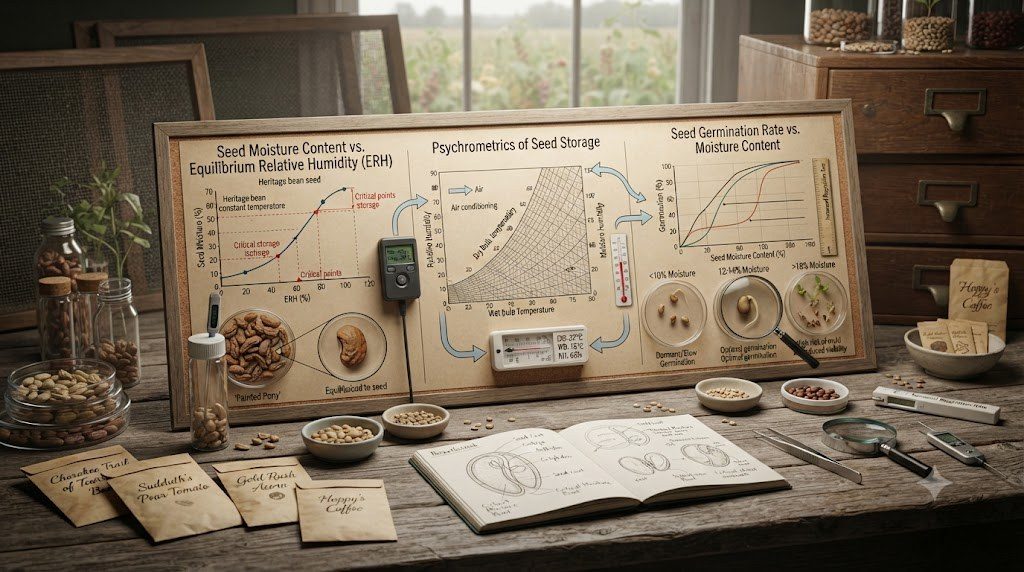
Seed Moisture Dynamics, Equilibrium Relative Humidity, and Psychrometrics

In the physical and biological sciences of seed preservation, no single abiotic factor exerts greater control over post-harvest longevity and biochemical stability than moisture. A seed is not a sealed dry capsule; it is an open, hygroscopic biological system that continuously exchanges water vapor with the ambient atmosphere until reaching thermodynamic equilibrium. The relationship between … Read more

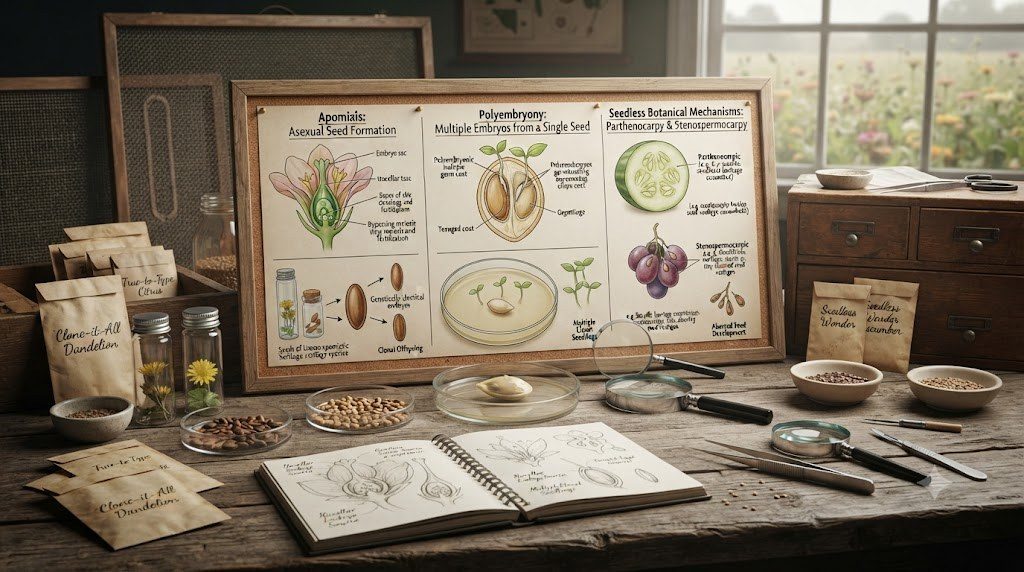
Apomixis, Polyembryony, and Seedless Botanical Mechanisms: Asexual Seed Cloning

In the vast majority of flowering plants, seed formation is inextricably linked to the drama of sexual reproduction—meiotic recombination of maternal and paternal chromosomes followed by double fertilization. However, nature has evolved breathtaking departures from this paradigm. Foremost among these atypical reproductive pathways are apomixis (asexual seed formation), polyembryony (the development of multiple embryos within … Read more

Heirloom, Open-Pollinated, and Hybrid (F1) Genetics: Heterosis and Allele Segregation

In modern agricultural botany, horticulture, and commercial seed production, few concepts are as fundamentally misunderstood yet practically consequential as the genetic classifications dividing open-pollinated (OP), heirloom, F1 hybrid, and genetically engineered (GM) seeds. These designations do not merely describe marketing categories or historical provenance; they represent distinct modes of genetic recombination, population genetics, heterosis dynamics, … Read more

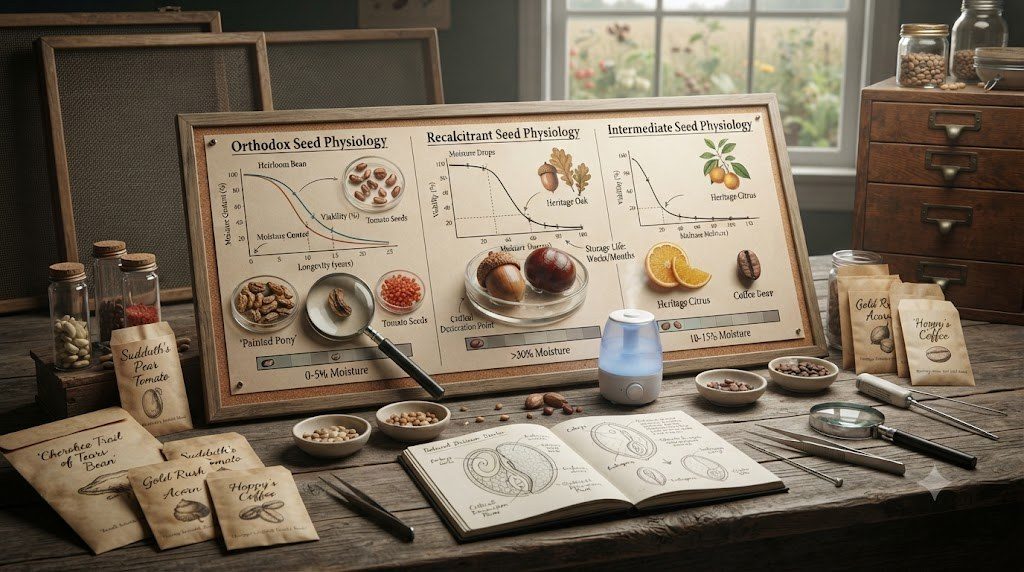
Orthodox, Recalcitrant, and Intermediate Seed Physiology: Desiccation and Longevity

In global plant conservation, agronomy, and seed banking science, the survival capacity of a seed during post-harvest storage is governed by a fundamental physiological classification established by Roberts in 1973: the division of seeds into orthodox, recalcitrant, and intermediate storage behaviors. This classification is not merely descriptive; it reflects profound molecular differences in desiccation tolerance, … Read more

Botanical Seed Morphology: Embryo, Endosperm, and Testa Dynamics

In the plant kingdom, the seed represents the pinnacle of evolutionary adaptation—a self-contained biological survival vessel capable of arresting metabolic respiration, withstanding severe environmental desiccation, and preserving genetic blueprints across space and time. From microscopic orchid dust seeds weighing mere micrograms to the colossal 20-kilogram double-coconut (Lodoicea maldivica), the structural architecture of spermatophyte seeds reflects … Read more