Seed Aging, Deterioration Mechanisms, and Tetrazolium Viability Testing
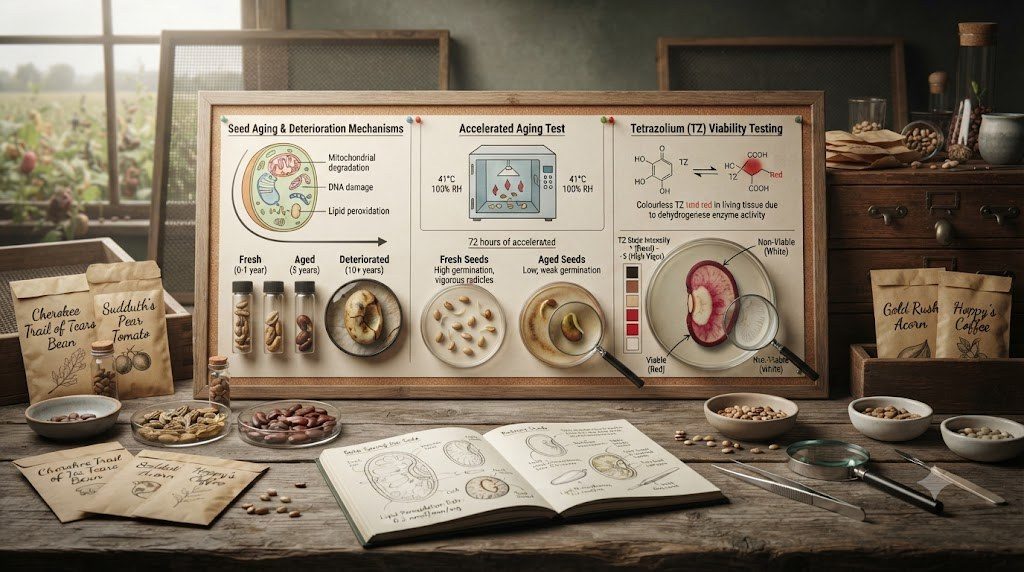
From the precise moment an orthodox seed achieves physiological maturity on the mother plant, an inexorable biological countdown begins. Even under optimal post-harvest storage, seeds undergo progressive, irreversible physiological and biochemical decay known universally as seed deterioration or seed aging. Unlike animal senescence, which involves complex neuroendocrine feedback loops, seed aging is a bottom-up biophysical … Read more
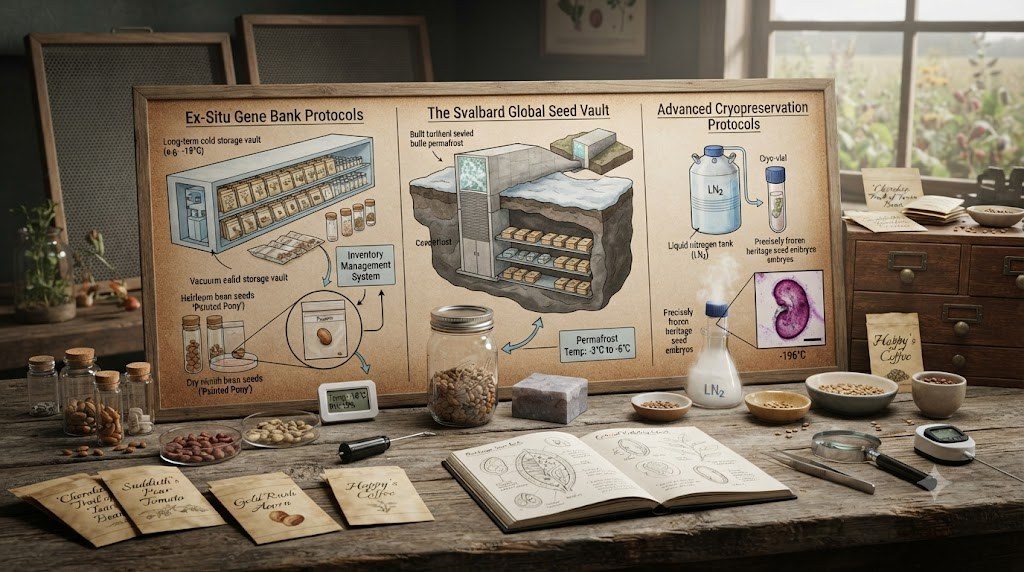
Seed Banking Protocols: Gene Banks, the Svalbard Vault, and Cryopreservation

In an era marked by accelerating anthropogenic climate disruption, widespread habitat fragmentation, and rapid agricultural genetic erosion, ex-situ seed banking represents human civilization’s ultimate biological insurance policy. Deep within fortified subterranean vaults—most famously the Svalbard Global Seed Vault carved into Arctic permafrost, the Millennium Seed Bank at Kew, and the CGIAR international gene banks—billions of … Read more

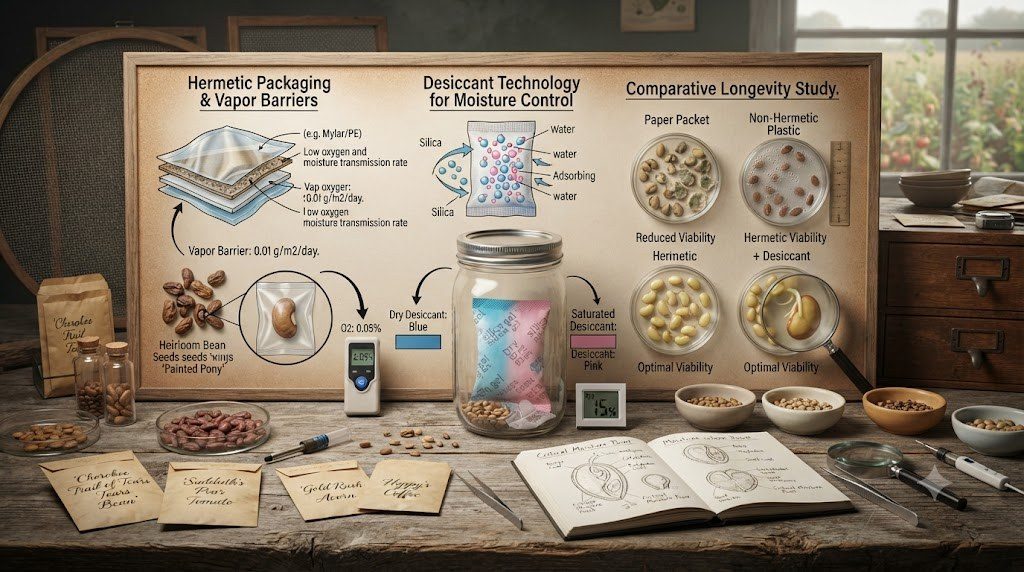
Hermetic Packaging, Vapor Barriers, and Desiccant Technology for Long-Term Storage

Once orthodox seeds have been conditioned to an optimal physiological moisture content, the battle for long-term viability shifts entirely to packaging engineering. In ambient atmospheres, even the most rigorously dried seed lot will rapidly absorb water vapor from humid air, re-equilibrating toward dangerous moisture levels within weeks. Preventing this hygroscopic decay requires hermetic sealing—the deployment … Read more

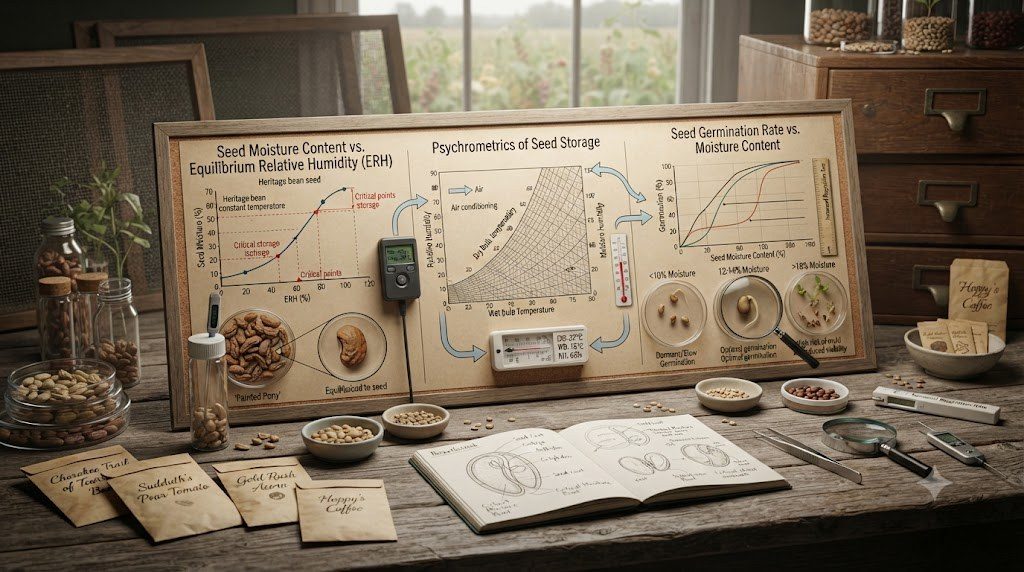
Seed Moisture Dynamics, Equilibrium Relative Humidity, and Psychrometrics

In the physical and biological sciences of seed preservation, no single abiotic factor exerts greater control over post-harvest longevity and biochemical stability than moisture. A seed is not a sealed dry capsule; it is an open, hygroscopic biological system that continuously exchanges water vapor with the ambient atmosphere until reaching thermodynamic equilibrium. The relationship between … Read more