Seed Pelleting, Encrusting, and Film-Coating Technologies: Materials and Machinery
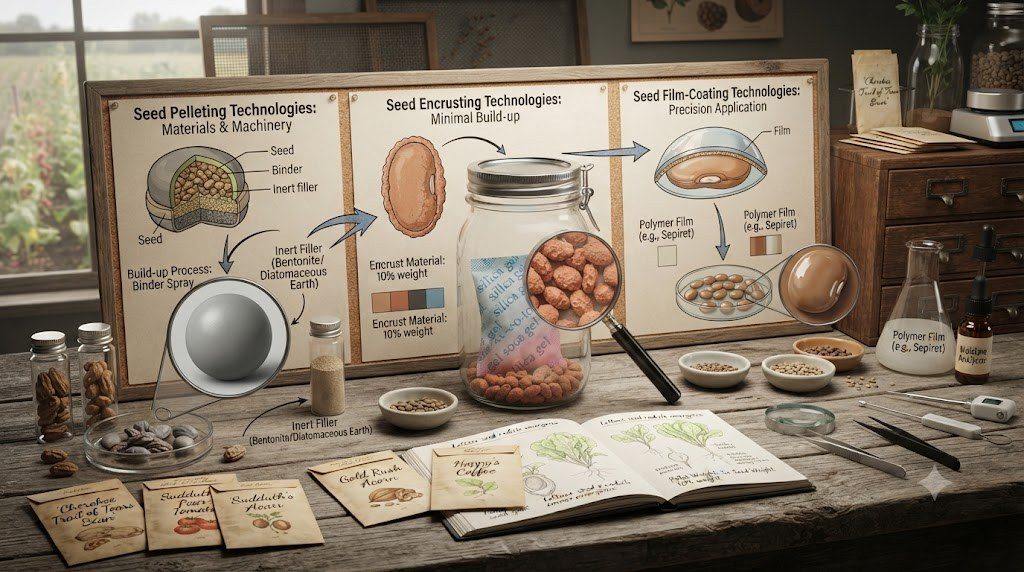
In modern high-speed mechanized agriculture and automated robotic greenhouse nurseries, the physical morphology of the seed is just as critical as its genetic pedigree. Nature engineered wild seeds with an astonishing array of irregular aerodynamic and dispersal shapes—from tiny, dust-like petunia and begonia seeds (measuring less than 0.3 millimeters) to angular, flat, and spiky carrot, … Read more

Seed Disinfection: Hot Water Thermotherapy, Surface Sanitizers, and Systemic Fungicides

In global agricultural pathology and certified seed certification, the seed is recognized as both the foundation of crop production and the ultimate biological vector for pathogen transmission. Hidden inside the embryo, beneath the seed coat, or contaminating the exterior testa, seed-borne microorganisms—including bacterial pathogens (such as Xanthomonas and Pseudomonas), devastating fungi (such as Alternaria, Fusarium, … Read more

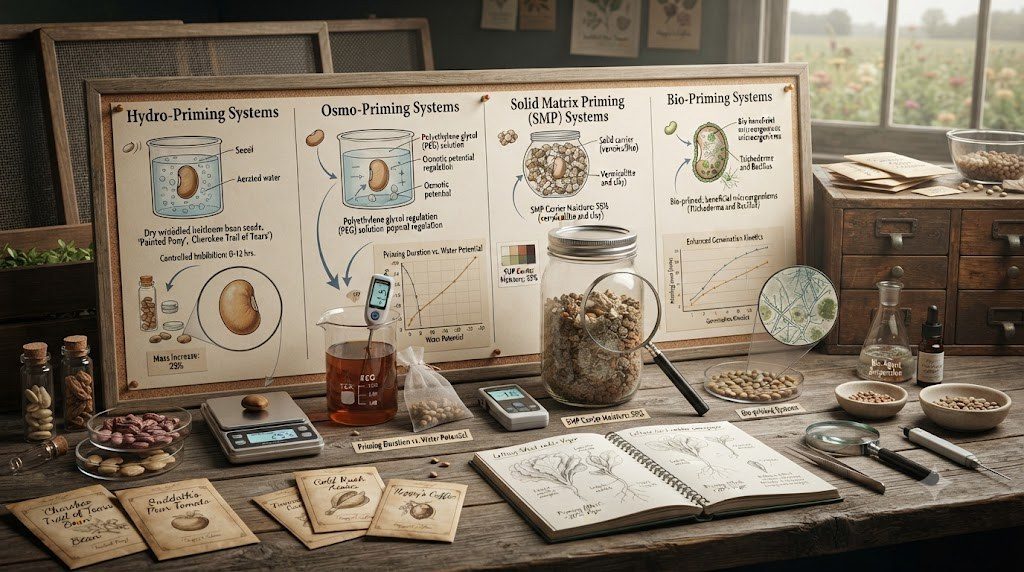
Seed Priming Technologies: Hydro, Osmo, Solid Matrix, and Bio-Priming Systems

In modern industrial agriculture and precision horticulture, uniform, rapid, and synchronized seedling emergence is the cornerstone of profitability. When seeds are planted directly into stressful field environments—characterized by cold soils, localized salinity, or erratic drought—unprimed seed lots exhibit staggered emergence, poor canopy closure, and high seedling mortality. The technological answer to this agronomic challenge is … Read more

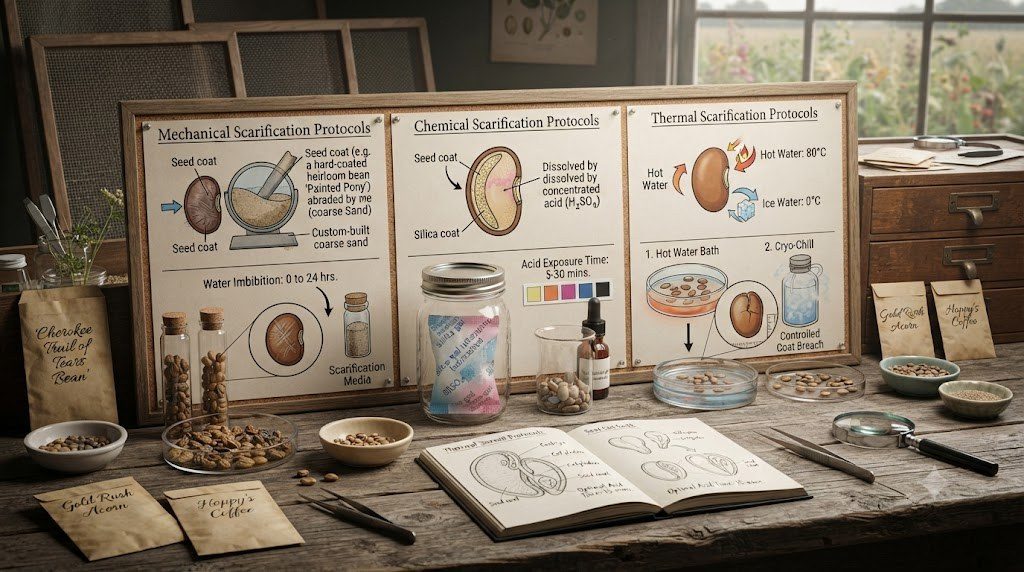
Mechanical, Chemical, and Thermal Scarification Protocols: Breaching Impermeable Coats

In the evolutionary arms race between angiosperms and their environments, the development of a hard, impermeable seed coat represents an extraordinary adaptation for long-term survival in hostile soils. Known in botanical science as physical dormancy (PY) or ‘hardseededness,’ this condition is characterized by a maternal testa so heavily sclerified, suberized, and impregnated with hydrophobic waxes … Read more