Grafting, Budding, and Vascular Cambium Union Mechanics: Cellular Fusion Stages
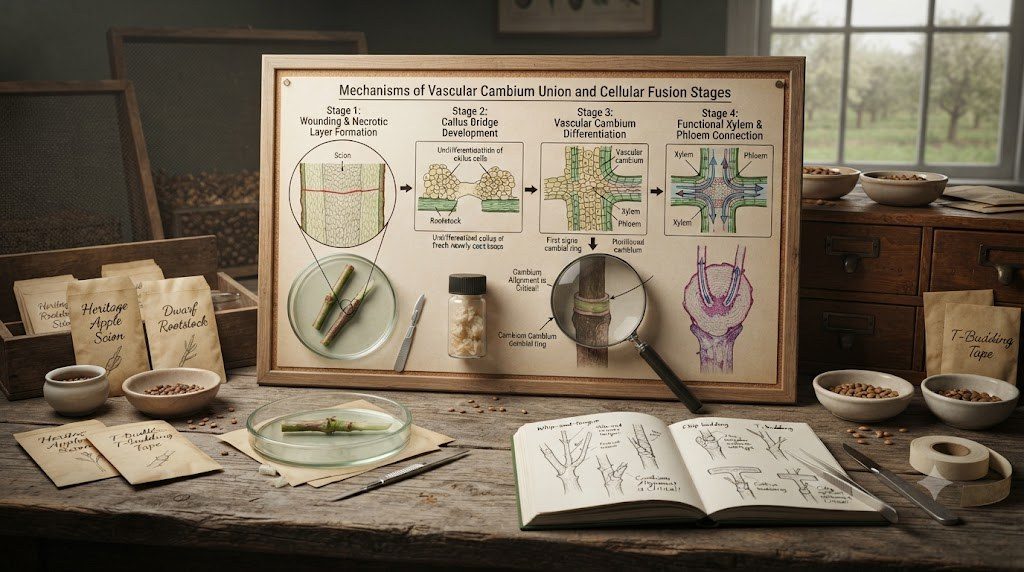
Among all surgical interventions practiced in agricultural botany, none is more ancient, economically indispensable, or biologically sophisticated than the art and science of grafting and budding. Practiced for millennia across the fertile river valleys of China, ancient Greece, and Rome, grafting is the deliberate surgical unification of two distinct botanical plant parts—the scion (the aerial … Read more

Micropropagation and Aseptic Embryo Rescue: In Vitro Media and Hormonal Morphogenesis

In the high-technology apex of modern plant propagation science, reproduction transcends the physical constraints of field soils, greenhouse plug trays, and seasonal weather patterns. Within sterile laminar flow hoods and climate-controlled tissue culture growth chambers, plant tissue culture (micropropagation) and aseptic embryo rescue harness cellular totipotency to multiply plant germplasm with unprecedented speed and precision. … Read more

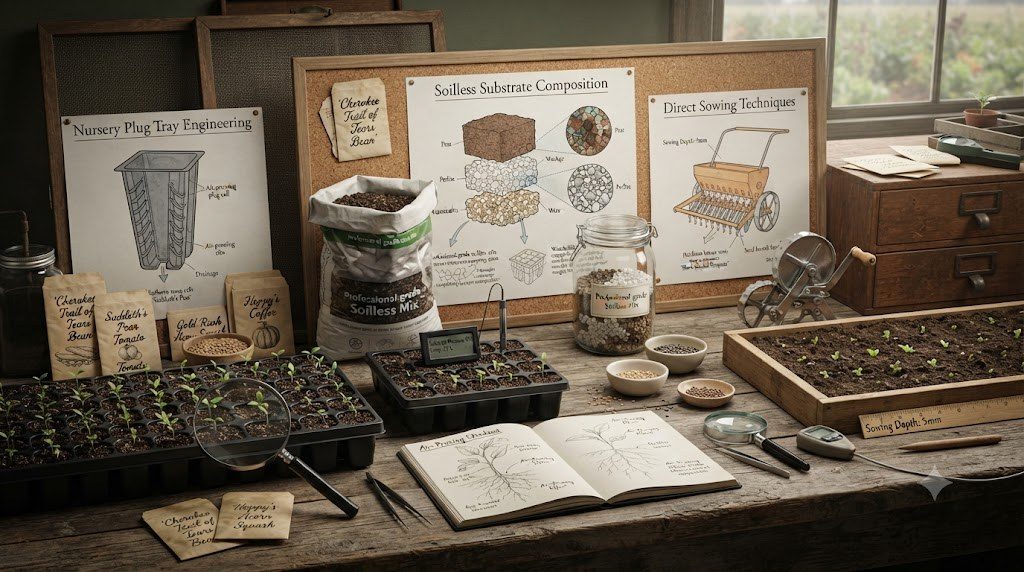
Seedbed Engineering: Nursery Plug Trays, Soilless Substrates, and Direct Sowing

In commercial greenhouse nursery production and precision field agriculture, the physical architecture of the germination zone—the seedbed—is the primary technological determinant of crop establishment. The critical transition from a dormant seed into an autotrophic, photosynthesizing seedling represents the most vulnerable window in the plant life cycle. During this sensitive 14-day window, the emerging radicle and … Read more

Sexual vs. Asexual Reproduction in Horticultural Propagation: Genetic Trade-offs

In the expansive discipline of horticultural plant propagation, the master propagator stands continuously at an evolutionary crossroads between two fundamentally disparate modes of biological multiplication: sexual propagation (seed reproduction) and asexual propagation (vegetative multiplication). This dichotomy is far more than a practical choice of convenience; it represents a profound choice between genetic diversity and genetic … Read more

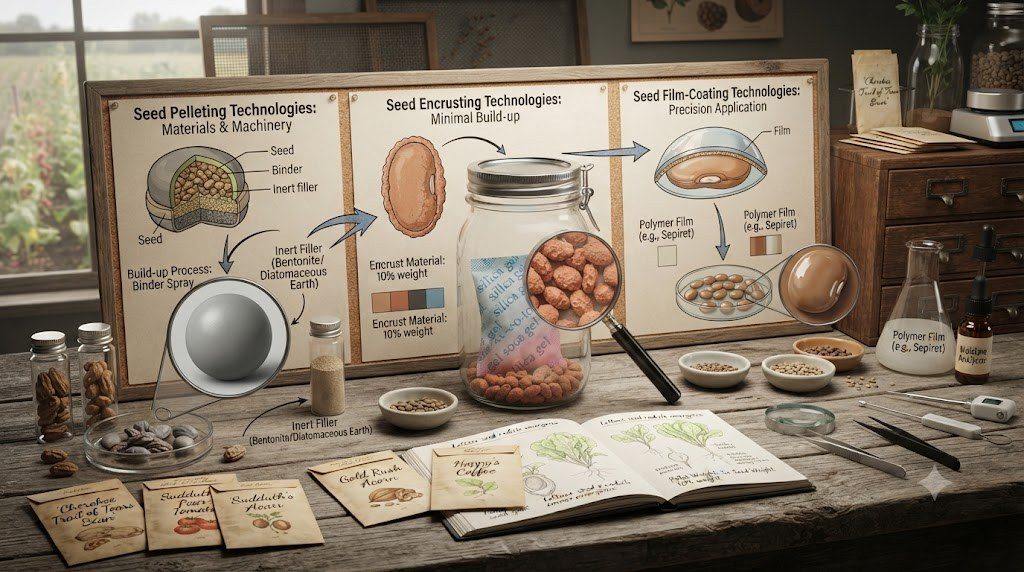
Seed Pelleting, Encrusting, and Film-Coating Technologies: Materials and Machinery

In modern high-speed mechanized agriculture and automated robotic greenhouse nurseries, the physical morphology of the seed is just as critical as its genetic pedigree. Nature engineered wild seeds with an astonishing array of irregular aerodynamic and dispersal shapes—from tiny, dust-like petunia and begonia seeds (measuring less than 0.3 millimeters) to angular, flat, and spiky carrot, … Read more

Seed Disinfection: Hot Water Thermotherapy, Surface Sanitizers, and Systemic Fungicides

In global agricultural pathology and certified seed certification, the seed is recognized as both the foundation of crop production and the ultimate biological vector for pathogen transmission. Hidden inside the embryo, beneath the seed coat, or contaminating the exterior testa, seed-borne microorganisms—including bacterial pathogens (such as Xanthomonas and Pseudomonas), devastating fungi (such as Alternaria, Fusarium, … Read more

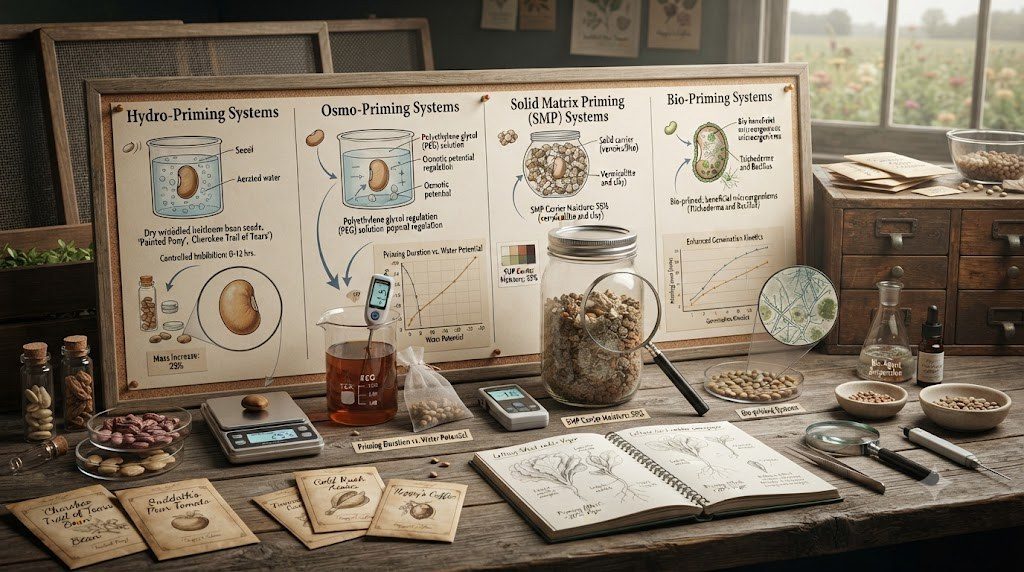
Seed Priming Technologies: Hydro, Osmo, Solid Matrix, and Bio-Priming Systems

In modern industrial agriculture and precision horticulture, uniform, rapid, and synchronized seedling emergence is the cornerstone of profitability. When seeds are planted directly into stressful field environments—characterized by cold soils, localized salinity, or erratic drought—unprimed seed lots exhibit staggered emergence, poor canopy closure, and high seedling mortality. The technological answer to this agronomic challenge is … Read more

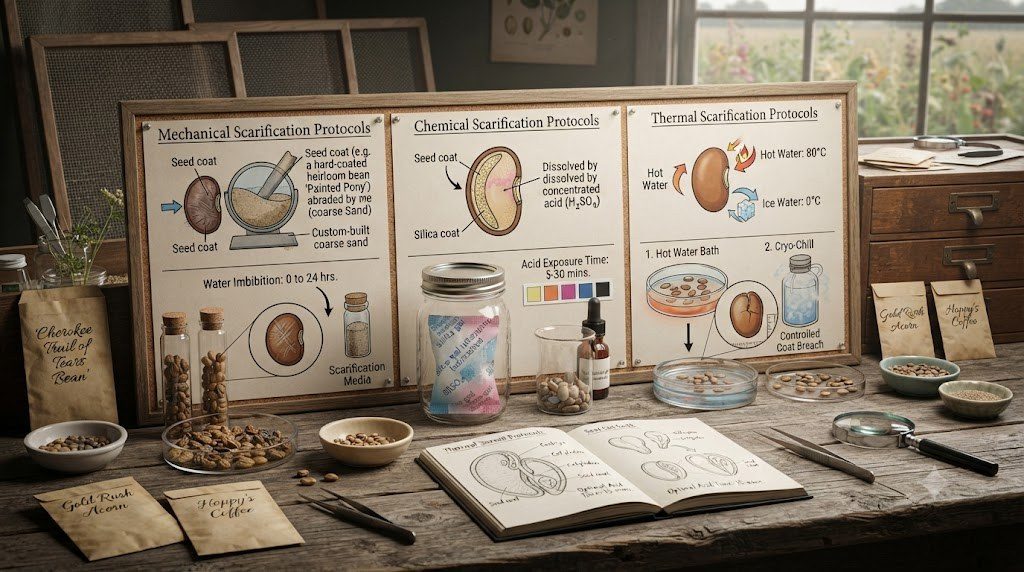
Mechanical, Chemical, and Thermal Scarification Protocols: Breaching Impermeable Coats

In the evolutionary arms race between angiosperms and their environments, the development of a hard, impermeable seed coat represents an extraordinary adaptation for long-term survival in hostile soils. Known in botanical science as physical dormancy (PY) or ‘hardseededness,’ this condition is characterized by a maternal testa so heavily sclerified, suberized, and impregnated with hydrophobic waxes … Read more

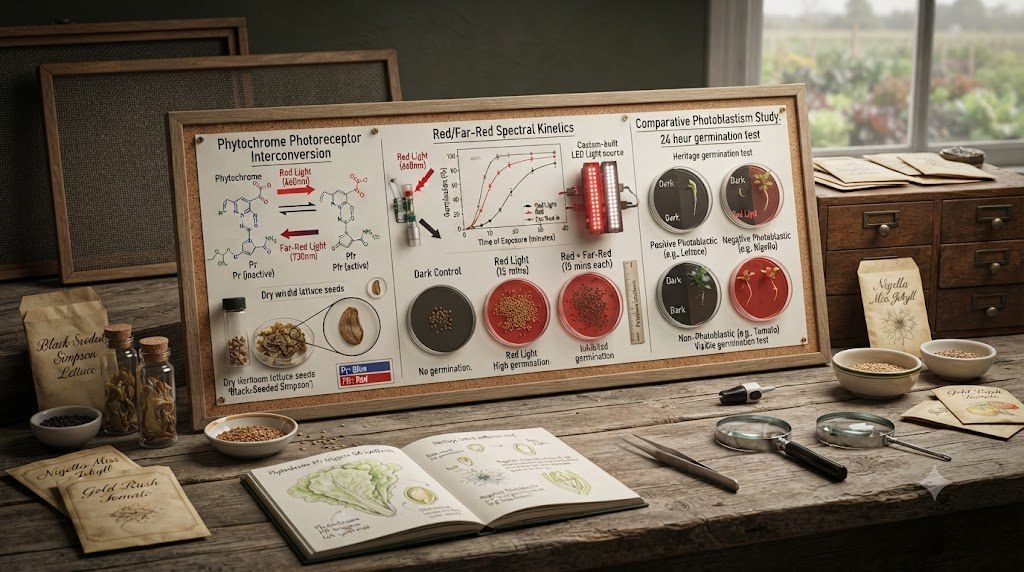
Photoblastism: Phytochrome Photoreceptors and Red/Far-Red Spectral Kinetics

In the subterranean world of the soil seed bank, darkness is the default state of existence. Yet for millions of plant species, light is the decisive environmental trigger that dictates whether to awaken from dormancy or remain entombed in quiescence. This light-dependent regulation of seed germination is known in botanical science as photoblastism. Seeds that … Read more

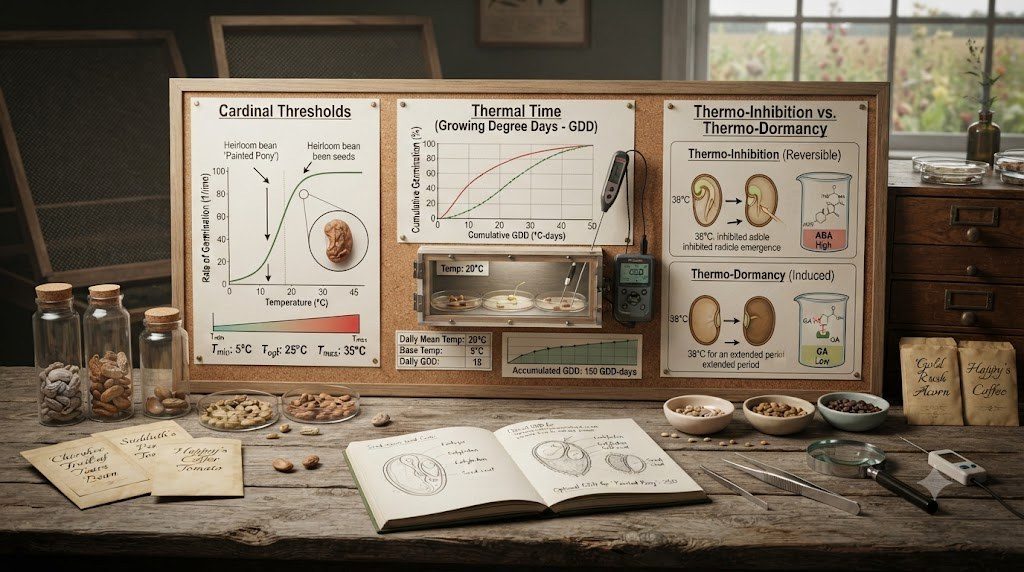
Temperature Kinetics: Cardinal Thresholds, Thermal Time (GDD), and Thermo-Inhibition

In the biophysical orchestration of plant life, temperature serves as the ultimate kinetic metronome. Unlike animals capable of homeostatic thermal regulation, seeds are poikilothermic organisms whose internal metabolic rates, enzymatic kinetics, membrane phase transitions, and hormonal catabolism are dictated entirely by the thermal energy of their immediate soil microenvironment. Every plant species has evolved an … Read more

About Seedcrafts

About Seedcrafts

Seedcrafts is an authoritative technical resource providing in-depth analysis, comprehensive guides, and expert perspectives on Seed Types • Seed Storage • Germination. We aim to equip specialists, practitioners, and enthusiasts with reliable, accurate, and actionable information.

Learn More →
Expert Research From verified industry specialists
Technical Guides Detailed workflows & analysis
Verified Quality Always updated & peer-reviewed